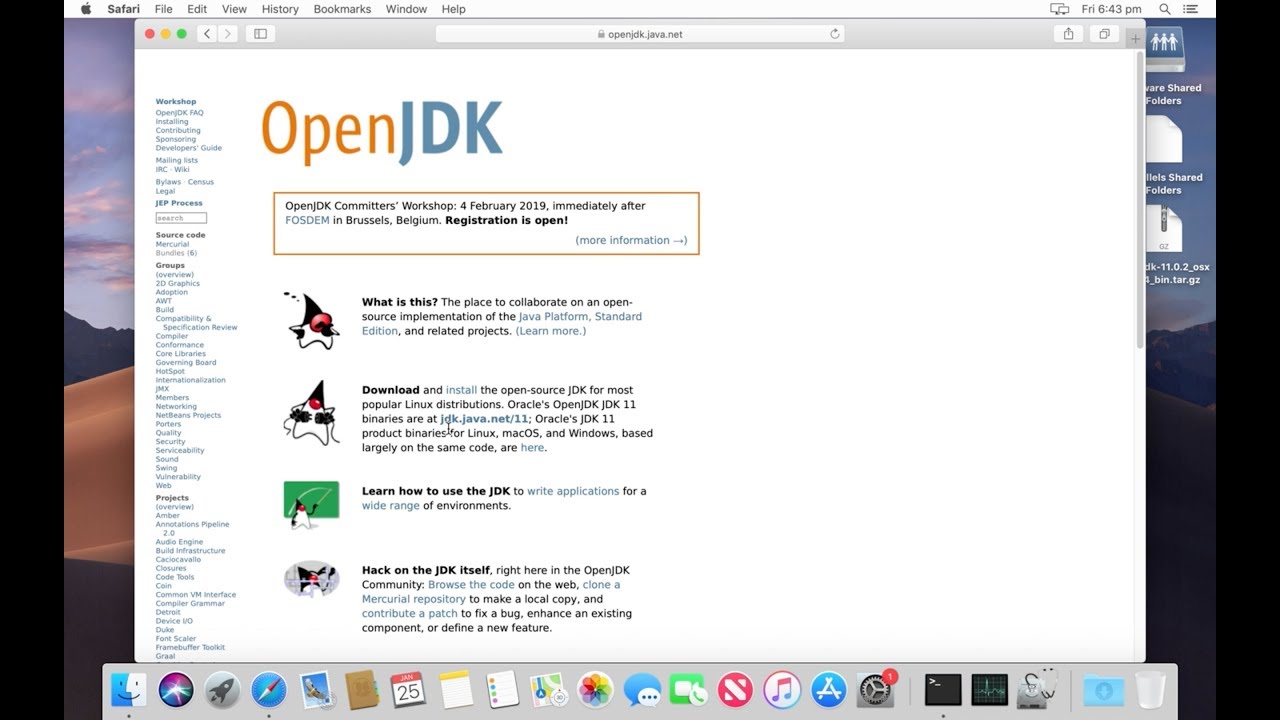
If you download the .tar.gz for OpenJDK 11 direct from http://jdk.java.net/11/, there’s no obvious install instructions (at least that I can find) either on the OpenJDK website on in the .gz file. If you’ve done any fiddling with different JDK versions on MacOS before, you’ve probably come across the ‘/usr/libexec/java_home’ utility (see here for my previous article about this utility, and answers to this StackOverflow post which includes one of the most extensive and useful guides to running different JDK versions on MacOS that I’ve seen) which does a number of useful things relating to which JDK you’re currently using in your PATH:
My assumption is that the ARM branch of the OpenJDK sourcecode + the macos bits that already exist for the macos-x64 release can be combined rather easily once someone with some familiarity with the openjdk sourcecode has an M1-based macos system to test it on, which should mean an adoptopenjdk macos-aarch64 release should be here within the month. Start today with Red Hat's implementation of OpenJDK—a free and open source implementation of the Java Platform, Standard Edition (Java SE). The following downloads are for development only, please use the Customer Portal downloads for OpenJDK support. On January 11, 2011, the Mac OS X Port Project was created on OpenJDK, and Apple made the first public contribution of code to the project. The initial Apple contribution built on the OpenJDK BSD port. In July 2011, SAP AG announced that SAP officially joined the OpenJDK project.
/usr/libexec/java_home : shows you were the current JDK home is, eg:
/usr/libexec/java_home -V : lists all installed JDKs, e.g.:
To switch between JDKs, use /usr/libexec/java_home -v version (e.g. 10):
Knowing that your available JDKs are installed to /Library/Java/JavaVirtualMachines/ by default, moving the contents of the downloaded OpenJDK 11 dir from inside the .gz file to the same location would make sense.
Once you’ve moved it there, java_home -V now shows the new JDK in place:
Updating my aliases to quickly switch versions in my .bash_profile, I now have:
Install Openjdk On Mac
Sourcing the .bash_profile (source .bash_profile) and then running each alias, now I’ve got OpenJDK 11 set up and ready to go!
With the OpenJDK project for Mac OS X, Apple will contribute most of the key components, tools and technology required for a Java SE 7 implementation on Mac OS X, including a 32-bit and 64-bit HotSpot-based Java virtual machine, class libraries, a networking stack and the foundation for a new graphical client. OpenJDK will make Apple's Java technology available to open source developers so they can access and contribute to the effort.
'We are excited to welcome Apple as a significant contributor in the growing OpenJDK community,' said Hasan Rizvi, Oracle’s senior vice president of Development. 'The availability of Java on Mac OS X plays a key role in the cross-platform promise of the Java platform. The Java developer community can rest assured that the leading edge Java environment will continue to be available on Mac OS X in the future. Combined with last month’s announcement of IBM joining the OpenJDK, the project now has the backing of three of the biggest names in software.'
Apple also said that Java SE 6 will continue to be available from Apple for Mac OS X Snow Leopard and the upcoming release of Mac OS X Lion. Java SE 7 and future versions of Java for Mac OS X will be available from Oracle.
'We’re delighted to be working with Oracle to insure that there continues to be a great version of Java on the Mac,' said Bertrand Serlet, Apple’s senior vice president of Software Engineering. 'The best way for our users to always have the most up-to-date and secure version of Java will be to get it directly from Oracle.'
Brew Openjdk
Java is a general purpose software development platform that is specifically designed to be open and enable application developers to 'write once, run anywhere.' The Java platform is most widely used in business software, Web and mobile applications.
In October, Apple announced it would deprecate Java for Mac OS X, meaning the company would no longer issue its own updates for Java. Apple's note said that the Java runtime could be removed altogether from future versions of Mac OS X.
An e-mail claimed to be from Apple CEO Steve Jobs said that his company decided it would no longer develop their own Java for Mac because their updates were always a version behind the official releases from Oracle and Sun. Jobs allegedly said that the current method 'may not be the best way to do it.'
Openjdk 1.8 Download
AppleInsider has affiliate partnerships and may earn commission on products purchased through affiliate links. These partnerships do not influence our editorial content.